
 Bitcoin
  Ethereum
  Tether
  BNB
BNB  USDC
USDC  XRP
XRP  Solana
  TRON
TRON  Lido Staked Ether
  Figure Heloc
  Hyperliquid
  Dogecoin
  USDS
USDS  Rain
Rain  LEO Token
  Wrapped stETH
  Zcash
Zcash  WhiteBIT Coin
  Wrapped Bitcoin
  Cardano
  Binance Bridged USDT (BNB Smart Chain)
  Stellar
  Wrapped Beacon ETH
  Monero
  Chainlink
  Canton
  Wrapped eETH
  Bitcoin Cash
  Dai
Dai  sUSDS
sUSDS  USD1
USD1  Ethena USDe
  Gram (prev. Toncoin)
  Coinbase Wrapped BTC
  Litecoin
  Global Dollar
  Circle USYC
  WETH
WETH  Hedera
  Sui
Sui  PayPal USD
  USDT0
USDT0  Avalanche
  Cronos
  Tether Gold
  Shiba Inu
  NEAR Protocol
  BlackRock USD Institutional Digital Liquidity Fund
  Ondo US Dollar Yield
  Ethena Staked USDe
  Uniswap
  Bittensor
  World Liberty Financial
  PAX Gold
  MemeCore
  Aster
Aster  HTX DAO
  OKB
OKB  Ripple USD
  Ondo
Ondo  Little Pepe
  USDD
USDD  syrupUSDC
  Falcon USD
  Polkadot
  Morpho
  Mantle
  DeXe
DeXe  Aave
Aave  BFUSD
BFUSD  Worldcoin
  Sky
Sky  Internet Computer
  Bitget Token
  Pi Network
  Ethereum Classic
  Pepe
Pepe  United Stables
  Jupiter Perpetuals Liquidity Provider Token
  Spiko EU T-Bills Money Market Fund
  Blockchain Capital
  Quant
Quant  KuCoin
  Janus Henderson Anemoy Treasury Fund
  Jito Staked SOL
  USDGO
USDGO  Stable
  Kelp DAO Restaked ETH
  Invesco Short Duration US Government Securities Fund
  JUST
JUST  Binance-Peg WETH
  POL (ex-MATIC)
  Rocket Pool ETH
  Cosmos Hub
  Kaspa
Kaspa  Binance Bridged USDC (BNB Smart Chain)
  Render
  Algorand
  Wrapped BNB
  ADI
ADI  Function FBTC
  Beldex
  USDtb
USDtb  NEXO
NEXO  Jupiter
  LAB
LAB  syrupUSDT
  Spiko Amundi Overnight Swap Fund (EUR)
  币安人生 (BinanceLife)
  Gate
Gate  Binance Staked SOL
  Ethena
  Audiera
  Janus Henderson Anemoy AAA CLO Fund
  Filecoin
  GHO
GHO  Pump.fun
  NEW X CEO IS BACK
  Polygon Bridged USDC (Polygon PoS)
  Lighter
  Solv Protocol BTC
  Flare
Flare  Lombard Staked BTC
  Usual USD
  XDC Network
  YLDS
YLDS  clBTC
clBTC  Midnight
  Provenance Blockchain
  USX
USX  Aptos
Aptos  Aerodrome Finance
  Venice Token
  StakeWise Staked ETH
  TrueUSD
  Arbitrum
  Kinetiq Staked HYPE
  A7A5
A7A5  tBTC
tBTC  Injective
  PancakeSwap
  Dash
Dash  EURC
EURC  VeChain
  Ondo Short-Term U.S. Government Bond Fund
  Pudgy Penguins
  c8ntinuum
  Hastra PRIME
  Mantle Staked Ether
  Official Trump
  Celestia
  Polygon PoS Bridged DAI (Polygon POS)
  Ether.fi
  Resolv wstUSR
  Artificial Superintelligence Alliance
  COCA
COCA  Sun Token
  Bonk
Bonk  SPX6900
  Doge Strategy
  Liquid Staked ETH
  First Digital USD
  Arbitrum Bridged WBTC (Arbitrum One)
  LayerZero
  Virtuals Protocol
  Pyth Network
  The9bit
  Terra Luna Classic
  Wrapped Flare
  Kinesis Gold
  Sei
Sei  L2 Standard Bridged WETH (Base)
  apxUSD
  Steakhouse USDC Morpho Vault
  Curve DAO
  Stacks
  Jito
Jito  Monad
Monad  Kite
Kite  Binance-Peg XRP
  Gnosis
  Ether.Fi Liquid ETH
  Tezos
Tezos  Renzo Restaked ETH
  Lido DAO
  MegaUSD
  Noon
Noon  Royal Dollar
  sBTC
sBTC  AINFT
AINFT  BitTorrent
  Bitcoin SV
  Jupiter Staked SOL
  Pendle
  Savings USDD
  Olympus
  DoubleZero
  Plasma
  Marinade Staked SOL
  Legacy Frax Dollar
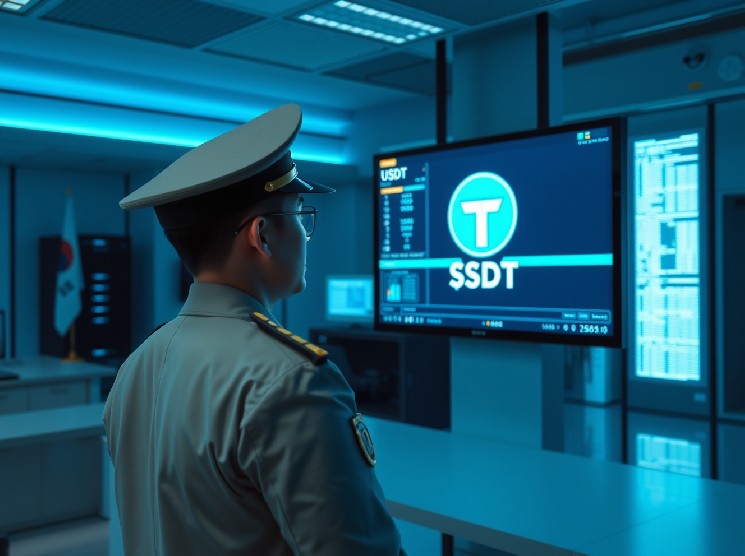
South Korean police have announced a significant escalation in their efforts to dismantle so-called “Tether laundromats,” following a series of high-profile cases where criminal organizations used the dollar-pegged stablecoin Tether ($USDT) to launder illicit funds. The National Office of Investigation confirmed it will bolster its virtual asset investigation capabilities to keep pace with increasingly sophisticated financial crimes.
Police Strengthen Virtual Asset Investigation Units
According to a report by The Korea Economic Daily, Park Seong-ju, head of the National Office of Investigation at the Korean National Police Agency, stated during a press conference in Seoul that authorities are preparing specialized training programs for virtual asset investigations. These programs will be developed in collaboration with key agencies, including the Financial Intelligence Unit (FIU).
“While investigations have previously focused on major crimes such as fraud and drug offenses involving virtual assets, they will now invariably include tracing the laundering of criminal proceeds,” Park said. The move signals a broader shift in South Korea’s approach to crypto-related crime, moving from reactive casework to proactive financial forensics.
What Are ‘Tether Laundromats’?
The term “Tether laundromat” refers to a method used by criminal networks to convert illicit cash into $USDT, often through unregistered or loosely regulated over-the-counter (OTC) brokers. Once converted, the stablecoin can be moved across borders quickly and with relative anonymity, bypassing traditional banking oversight. This has made $USDT a preferred tool for money laundering in East Asia, particularly in jurisdictions with high crypto adoption but uneven regulatory enforcement.
South Korean authorities have previously uncovered cases where drug trafficking rings and online fraud syndicates used Tether to move millions of dollars. The new directive aims to close the gaps that allow these transactions to go undetected.
Why This Matters for the Crypto Industry
South Korea is one of the world’s most active cryptocurrency markets, with a high proportion of retail traders and a sophisticated digital asset ecosystem. The police crackdown represents a growing global trend where law enforcement agencies are developing specialized skills to trace stablecoin transactions on public blockchains.
Stablecoins like $USDT, while designed for price stability, operate on transparent ledgers. However, tracing the flow of funds across multiple wallets and exchanges requires advanced analytical tools and cross-border cooperation. The new training programs are expected to give South Korean investigators the technical expertise needed to follow these digital trails.
Conclusion
The announcement signals a hardening of South Korea’s stance on crypto-related financial crime. By investing in specialized training and inter-agency cooperation, the police aim to disrupt the use of stablecoins for money laundering while maintaining the integrity of the broader virtual asset market. For investors and industry participants, the development underscores the increasing regulatory scrutiny on stablecoin usage worldwide.
FAQs
Q1: What exactly is a “Tether laundromat”?
A: It is a term used by law enforcement to describe a method where criminals convert illegal cash into Tether ($USDT) through unregulated brokers, then move the funds across borders using cryptocurrency networks to hide the origin of the money.
Q2: Why is South Korea focusing on Tether specifically?
A: Tether is the most widely used stablecoin and has been frequently linked to money laundering cases in East Asia. Its dollar peg and ease of transfer make it attractive for criminal networks seeking to bypass traditional banking controls.
Q3: Will this crackdown affect ordinary crypto users in South Korea?
A: The crackdown is aimed at criminal organizations and unregistered OTC brokers. Legitimate traders and exchanges that comply with existing regulations are unlikely to be directly affected, though enhanced monitoring may lead to stricter transaction reporting requirements.
