
 Bitcoin
 Ethereum
 Tether
 BNB
 USDC
 XRP
 Solana
 TRON
 Lido Staked Ether
 Figure Heloc
 Hyperliquid
 Dogecoin
 USDS
 Rain
 LEO Token
 Wrapped stETH
 Zcash
 WhiteBIT Coin
 Wrapped Bitcoin
 Cardano
 Binance Bridged USDT (BNB Smart Chain)
 Stellar
 Wrapped Beacon ETH
 Monero
 Chainlink
 Canton
 Wrapped eETH
 Bitcoin Cash
 Dai
 sUSDS
 USD1
 Ethena USDe
 Gram (prev. Toncoin)
 Coinbase Wrapped BTC
 Litecoin
 Global Dollar
 Circle USYC
 WETH
 Hedera
 Sui
 PayPal USD
 USDT0
 Avalanche
 Cronos
 Tether Gold
 Shiba Inu
 NEAR Protocol
 BlackRock USD Institutional Digital Liquidity Fund
 Ondo US Dollar Yield
 Ethena Staked USDe
 Uniswap
 Bittensor
 World Liberty Financial
 PAX Gold
 MemeCore
 Aster
 HTX DAO
 OKB
 Ripple USD
 Ondo
 Little Pepe
 USDD
 syrupUSDC
 Falcon USD
 Polkadot
 Morpho
 Mantle
 DeXe
 Aave
 BFUSD
 Worldcoin
 Sky
 Internet Computer
 Bitget Token
 Pi Network
 Ethereum Classic
 Pepe
 United Stables
 Jupiter Perpetuals Liquidity Provider Token
 Spiko EU T-Bills Money Market Fund
 Blockchain Capital
 Quant
 KuCoin
 Janus Henderson Anemoy Treasury Fund
 Jito Staked SOL
 USDGO
 Stable
 Kelp DAO Restaked ETH
 Invesco Short Duration US Government Securities Fund
 JUST
 Binance-Peg WETH
 POL (ex-MATIC)
 Rocket Pool ETH
 Cosmos Hub
 Kaspa
 Binance Bridged USDC (BNB Smart Chain)
 Render
 Algorand
 Wrapped BNB
 ADI
 Function FBTC
 Beldex
 USDtb
 NEXO
 Jupiter
 LAB
 syrupUSDT
 Spiko Amundi Overnight Swap Fund (EUR)
 币安人生 (BinanceLife)
 Gate
 Binance Staked SOL
 Ethena
 Audiera
 Janus Henderson Anemoy AAA CLO Fund
 Filecoin
 GHO
 Pump.fun
 NEW X CEO IS BACK
 Polygon Bridged USDC (Polygon PoS)
 Lighter
 Solv Protocol BTC
 Flare
 Lombard Staked BTC
 Usual USD
 XDC Network
 YLDS
 clBTC
 Midnight
 Provenance Blockchain
 USX
 Aptos
 Aerodrome Finance
 Venice Token
 StakeWise Staked ETH
 TrueUSD
 Arbitrum
 Kinetiq Staked HYPE
 A7A5
 tBTC
 Injective
 PancakeSwap
 Dash
 EURC
 VeChain
 Ondo Short-Term U.S. Government Bond Fund
 Pudgy Penguins
 c8ntinuum
 Hastra PRIME
 Mantle Staked Ether
 Official Trump
 Celestia
 Polygon PoS Bridged DAI (Polygon POS)
 Ether.fi
 Resolv wstUSR
 Artificial Superintelligence Alliance
 COCA
 Sun Token
 Bonk
 SPX6900
 Doge Strategy
 Liquid Staked ETH
 First Digital USD
 Arbitrum Bridged WBTC (Arbitrum One)
 LayerZero
 Virtuals Protocol
 Pyth Network
 The9bit
 Terra Luna Classic
 Wrapped Flare
 Kinesis Gold
 Sei
 L2 Standard Bridged WETH (Base)
 apxUSD
 Steakhouse USDC Morpho Vault
 Curve DAO
 Stacks
 Jito
 Monad
 Kite
 Binance-Peg XRP
 Gnosis
 Ether.Fi Liquid ETH
 Tezos
 Renzo Restaked ETH
 Lido DAO
 MegaUSD
 Noon
 Royal Dollar
 sBTC
 AINFT
 BitTorrent
 Bitcoin SV
 Jupiter Staked SOL
 Pendle
 Savings USDD
 Olympus
 DoubleZero
 Plasma
 Marinade Staked SOL
 Legacy Frax Dollar

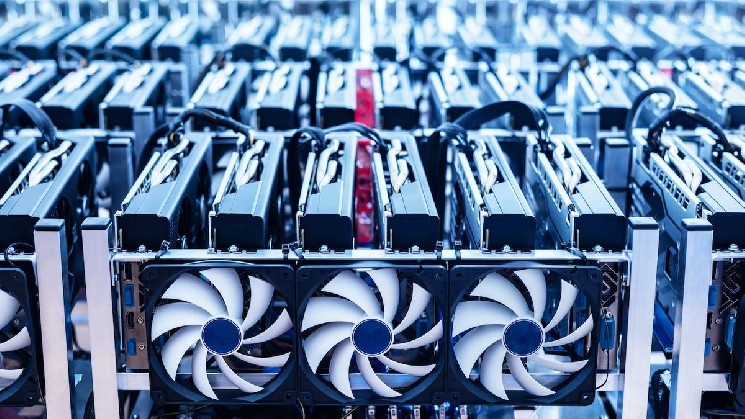
A 180-square-meter house in icy Nokia, a small town in Finland that gave the once-popular phone maker its name, has fully disconnected from the district heating network and now heats its rooms with a bitcoin miner.
The machine sits inside what SunBit, a Finnish company, sells as a Bitcoin Boiler. Every kilowatt-hour a mining computer draws comes out as heat. SunBit captures that heat in water at up to 60°C and pushes it through a building’s radiators and floor pipes the way an oil or gas boiler would. The boiler earns bitcoin the whole time it runs.
Essentially, the idea is that if the bitcoin earned covers the electricity consumed, the homeowner effectively gets heat without an ongoing net energy bill. But the system costs roughly $20,000 or more to install, and its profitability depends on bitcoin’s price, electricity costs and the amount of computing power competing for mining rewards.
“The heating itself works regardless of the market, and only the payback time moves,” Suomi said.
There’s also a deadline built into that calculation. Bitcoin’s next halving, which is expected in spring 2028, will cut the amount of new bitcoin awarded to miners in half. That could happen well before homeowners recover the cost of their heating systems, potentially throwing a wrench in the pitch for the Bitcoin Boiler.
SunBit, which delivered its first production batch of Bitcoin Boilers in 2025, now has 30 systems running, founder and CEO Elmeri Suomi told CoinDesk this week. All but one are in Finland, and between them they have replaced or cut back on gas, oil, wood and district heating.
At a commercial property in Lekkum, in the Netherlands, SunBit’s first export project in 2025, a miner replaced gas heating. In Kotka, a port city of about 50,000 on Finland’s southeast coast, a 200-square-meter house runs one alongside its existing oil boiler as a hybrid system.
At an old manor house in Tampere, Finland’s third-largest city, mining replaced wood heating, and the miner keeps a 1,500-liter water tank at 50°C to 60°C. A 3,000-square-meter industrial hall in Vimpeli runs one alongside an air-to-water heat pump, and it soaks up surplus power from a 30-kilowatt solar array.
Finland is already the testbed for heating with mining. MARA’s systems feed waste heat from its miners into district heating networks in Satakunta and Seinäjoki, warming about 80,000 residents.
For a house using 25,000 kilowatt-hours of heat a year, SunBit puts an air-to-water heat pump’s running cost at about $1,100 and district heating at about $3,170. Run only long enough to cover that house’s 25,000 kilowatt-hours, rather than nonstop, the miner instead earns about $490 more than its electricity costs.
This shows the trade-off: a heat pump requires much less electricity to deliver the same amount of heat, whereas a bitcoin miner consumes more electricity but can generate revenue that offsets its operating costs. The miner’s apparent advantage depends on mining profitability rather than superior heating efficiency.
Suomi says winter is where a miner pulls ahead. “A miner’s output does not depend on outdoor temperature. Unlike an air-source heat pump, its efficiency does not drop at –25 °C: 100% of the electricity becomes heat at up to 60 °C, every hour of the year,” he said.
A miner’s running cost, though, also hangs on bitcoin’s price and how much computing power competes for each block.
“The trade-off is that the economics depend on Bitcoin price and network difficulty, which a heat pump doesn’t,” Suomi said, putting payback at three to six years for systems that cost about $20,400 to $31,400 installed.
The 2028 halving
Anyone who buys a system now will hit bitcoin’s next halving in 2028 before it pays for itself. The event is scheduled to halve the new coins awarded for each block from 3.125 to 1.5625 bitcoin.
SunBit’s calculator leaves it out. It prices payback based on today’s profitability, whether bitcoin trades at $100,000 or $20,000, because the company can’t guarantee income.
“I personally don’t want to give price predictions and difficulty predictions,” Suomi said, adding that SunBit explains the halving to every customer instead, using its past effect on profitability.
Holding SunBit’s own inputs fixed, mining income would drop from about 13 cents per kilowatt-hour to about 7 cents, below the 11-cent power price. The heat would then cost the owner about 4 cents per kilowatt-hour, close to what an air-to-water heat pump costs to run at SunBit’s assumed efficiency. A household that installs this winter gets roughly 18 months at today’s margins before the cut.
On that math, a miner-heated house in Finland keeps its free heat after 2028 halving only if bitcoin trades above roughly $131,000, about 60% above Friday’s price. So, for a few dozen buildings in Finland, the ‘number go up’ is now a heating plan.

-
1
Binance users in some European countries told to pull crypto before fees kick in, with accounts closing by year end
-
2
U.S. Treasury moves to cut off crypto exchange MEXC over $16 billion in alleged illicit flows
-
3
Gnosis Pay breach exposes card numbers, home addresses and linked crypto wallets
-
4
Apple, Meta reject OKX–ICE tokenized stock plans, leaving crypto firms as the ones to watch
-
5
U.S. prediction markets regulator issues demand that clashes directly with courts
-
6
The crypto industry has found new ways to grow. Making money from them is another story
-
7
Thailand moves to block Bitget as crypto exchange’s local acquisition faces uncertainty
-
8
U.S. added 165,000 jobs in October, blowing past 65,000 estimate
-
9
Over $1 billion in bullish bets liquidated while ETF flows suggest no help in spot market
-
10
Live updates: Bitcoin flatlines under $76,000 as stock bounce loses steam into the close

Beyond the Risk-Free Rate: Diversified Real World Yield in Productive Stablecoins

Beyond the Risk-Free Rate: Diversified Real World Yield in Productive Stablecoins
Diversified RWA stablecoins sustain 5-7% yield from real credit as crypto funding compresses to ~4%. $GENIUS pushes yield off-chain; TAM grows to $4B in 3 years.
Diversified RWA stablecoins sustain 5-7% yield from real credit as crypto funding compresses to ~4%. $GENIUS pushes yield off-chain; TAM grows to $4B in 3 years.
Why it matters:
Diversified RWA stablecoins sustain 5-7% yield from real credit as crypto funding compresses to ~4%. $GENIUS pushes yield off-chain; TAM grows to $4B in 3 years.

The crypto industry has found new ways to grow. Making money from them is another story

U.S. added 165,000 jobs in October, blowing past 65,000 estimate

Bitcoin steadies after AI-led selloff as eyes turn to latest U.S. jobs figures
